
Building is in my blood; my mother’s family ran a Midlands building company for ninety-nine years having previously been itinerant craftsmen. I remember with huge affection childhood visits to the ‘yard’. My last employment before I retired was as Chief Executive of Lincoln Cathedral where I learnt a good deal about stone masons and the way medieval cathedrals were built. Most recently I have been exploring the history of British manufacturing and the places where it took place. This brought me close to the building of mills, factories and houses over a period spanning three centuries or so.
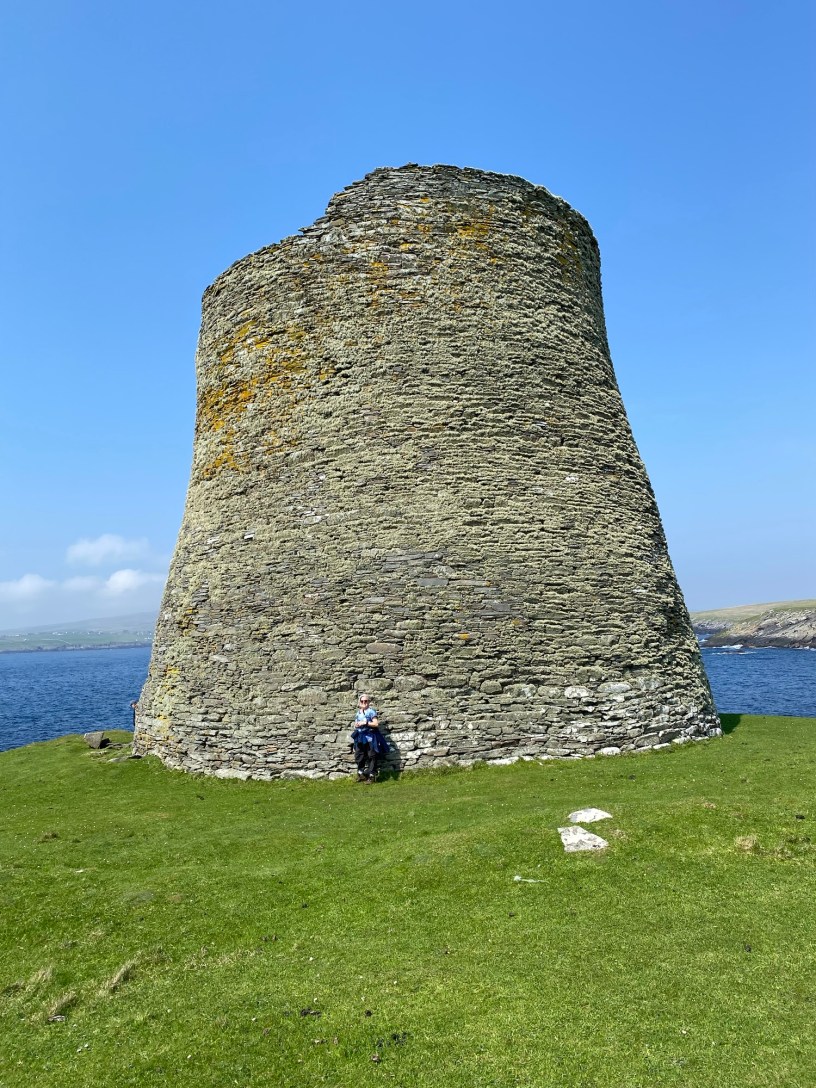
I needed to try to understand how it was all built. I will add to this page as I learn more. The image is of one of the oldest buildings in Britain, the Broch of Mousa on Shetland dating from 2,500 BCE.
This research is about Britain and so the story of early English Building is relevant background and a good place to start.
My next point of call is Rome. Roman architecture stands out because of the variety of materials used and structures built, but most of all because modern building from the Renaissance onward looked to Rome for both theoretical and practical ideas.
My manufacturing research brought me close to building materials and so next comes building from different materials.
Building Materials
Wood
Wood was the most widely available material. Combined with wattle and daub for walls and thatch for the roof, relatively wind and water tight dwellings could be built. These were common in these islands for many centuries. Read more.
Brick
Brick was the chosen material of the Roman invaders but then largely forgotten until Tudor times when it was embraced for the construction of many manor houses. Read more.
Stone
Stone is of course present near to the surface in many regions. It was the favoured material of the invading Normans. Stone was used for castles but also and rather more for churches. Read more.
Glass
Glass was used by the Romans who also discovered a way to make it clear. Coloured glass was made for medieval cathedrals and a wider use of glass for windows came in Tudor times when the wealthy enjoyed the visual impact of glass inside their manors.
Uses and Classes of Building
Churches
Church building over ten centuries consumed more labour, money and materials than any other form of building.
Military Buildings
Starting with castles, buildings for military purposes have been present on the islands from early times.
Country Houses and Urban Building for the Wealthy and Merchant Classes
The great country houses were built from Tudor times onward for the benefit of the landed gentry and demonstrate the embracing of classical architecture. Urban building followed and I look at housing for the wealthy and merchant and middle classes.
Urban and Rural Housing for the Poor
Overcrowded and poorly built homes were the lot of the growing urban population. The problems of poor housing had been the subject of many reports and debates during the nineteenth century. It wasn’t until 1930 that slum clearance programme spread across the country. The poor fled the countryside for urban jobs. Rural housing was appalling.
Industrial Buildings
Industrial buildings were at first all manner of mill. Some built close to rivers and streams to harness water power, others where the power of wind could be harnessed.
Transport and Transport Buildings
The building of transport routes comes into play with turnpike roads, canals and then railways.
Civic Buildings
The industrial towns weren’t shy, and commissioned magnificent buildings. London, of course, was not to be outdone.
The Suburbs
The suburbs offered homes, away from the crowded urban environment, where lives could be lived behind closed doors. Houses and gardens were much smaller than those occupied by the wealthy, but they were private – the castles of the middle class.
Hotels, Entertainment Venues, Sports Buildings and Stadiums
These buildings tell how leisure was entering the lives of the population, from thev Ritz Hotel to dog racing tracks.
Building Contractors
The nineteenth century saw the advent of the building contractor who brought together all the necessary trades and built factories, warehouses, civic buildings and homes for the growing population.
Non-traditional building
After the world wars, the need for housing in particular was desperate. Many of those involved in building put forward suggestions of which some found concrete form. We see the introduction of Concrete and Steel in building.
Concrete
Concrete transformed building especially with the addition of steel.
Steel
Iron was used in frames and pillars for building from the eighteenth century. The advent of steel was met at first with scepticism by architects, but then embraced. It was more expensive than concrete, but still had a significant impact.

