
Brick has been used in building for millenia, dating back certainly to ancient Egypt.
During the four centuries of Roman occupation of Britain it is thought that many millions of bricks were made, a technique forgotten in the Dark Ages, but rediscovered in the early Middle Ages. Colchester Castle holds the Roman memory being built of reclaimed Roman brick.
There is evidence of a brickworks in Hull in the early fourteenth century at the close of which the town was encircled by a brick wall. East Barsham Manor in Norfolk is evidence of Tudor building in brick and also of the wealth the county enjoyed from the wool trade. Bricklayers were clearly artists given the variety and pattern of bricks used. In Tudor times, clay for bricks would be dug close to the site and fired in a clamp. The moulds would be lined with course sand, giving the brick a rough exterior. These Norfolk bricks were decidedly red; London bricks are much closer to yellow as evident in Pimlico above the Stucco course.
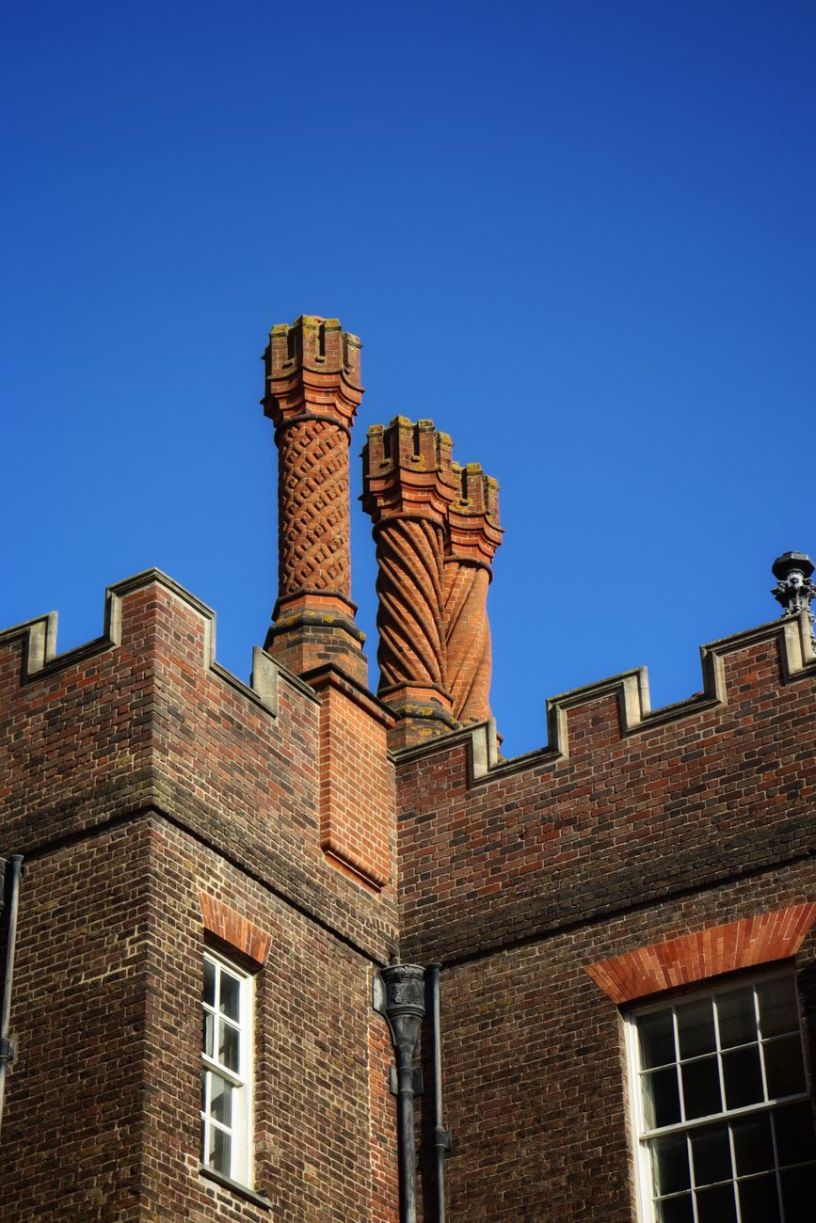
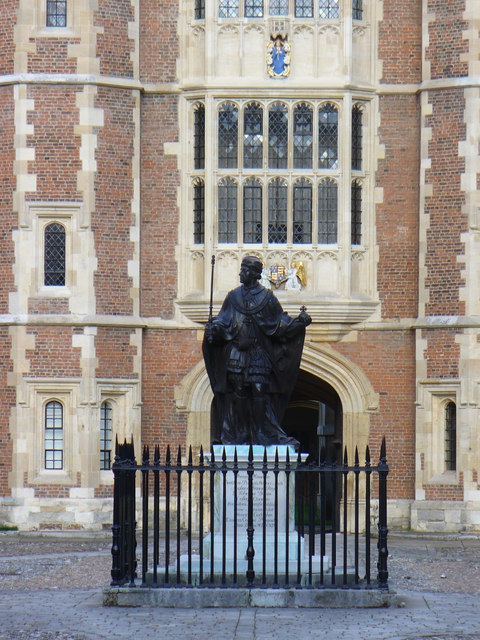
Famous examples of Tudor brickwork are to be seen at Hampton Court Palace (in the post image with elaborate chimneys). It was in Tudor times that manor houses began to use chimneys in blocks. Eton College has fine brickwork, but much dates from the reign of its Founder Henry VI. The bricks were sourced from the brickyard of William Vesey in nearby Slough.
In my exploration of British manufacturing I identified certain towns as brick producers responding to the needs of a fast growing population:
- Accrington known for its very hard bricks
- Slough, Uxbridge, Hayes, supplying London builders
- Fleton near Peterborough the home of London Brick
- Corby, clay was discovered whilst digging a railway tunnel
- Ibstock, Leicestershire a current producer of bricks
- Bracknell, brickworks producing twelve million bricks a year by the end of the nineteenth century
- Fareham, famous for London Blue bricks and Fareham Reds
- Telford, bricks produced alongside tons of iron
- Stourbridge, with bricks produced for glass furnaces
I write of the use of brick in urban house building. There are of course many rural examples. An early one was Little Wenham Hall near Colchester, built between 1270 and 1295 of brick with flint for the base of walls and Caen stone added later for buttresses. Although it looks a little like a castle keep, it was a house. Here is a link to Pevsner in Suffolk.

