


Coins were traditionally minted by a stamp and hammer, and indeed had been in Segovia since Roman times.
The invading Spanish discovered vast quantities of silver at Potosi in Peru in the late sixteenth century and mined it using first local slave labour and then, when mining killed them, slaves from Africa. The bullion was shipped back to Spain. To mint coins in large quantities demanded mechanisation which came to Spain from Germany.
Before looking at this, there is a broader picture. When more than enough had been shipped to Spain the galleons went onto China via Manila. The Chinese were producing silks and porcelain much in demand in Europe and the cities of Central and South America and took silver in payment. The silver flooded the economy and inflation resulted; the same was true in Spain. China had been a settled economy where transactions were conducted on trust. In time paper money took over but when the waring between cities started again, the time for silver had come. Pieces of eight became the means of payment for much international trade and the coins were later discovered far and wide. But back to Spain.
King Philip ordered a mint to be built on the site of an old water mill in Segovia where there was ample running water to drive the minting machinery.
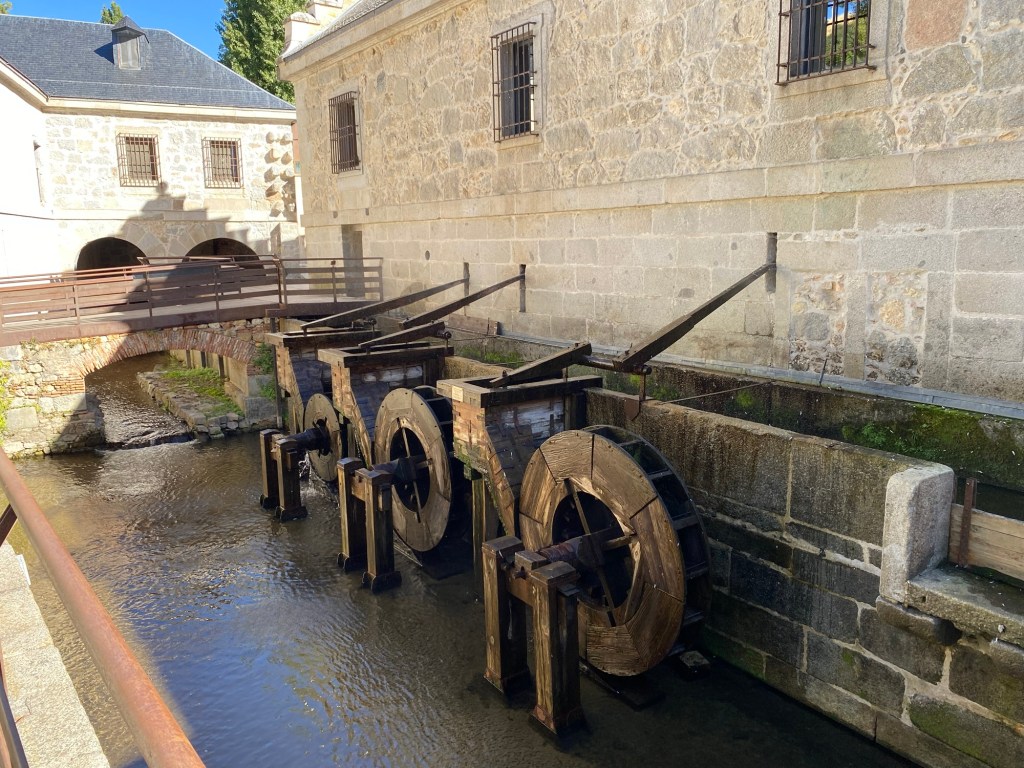
The first machine was a rolling mill to flatten the metal to the required thickness.
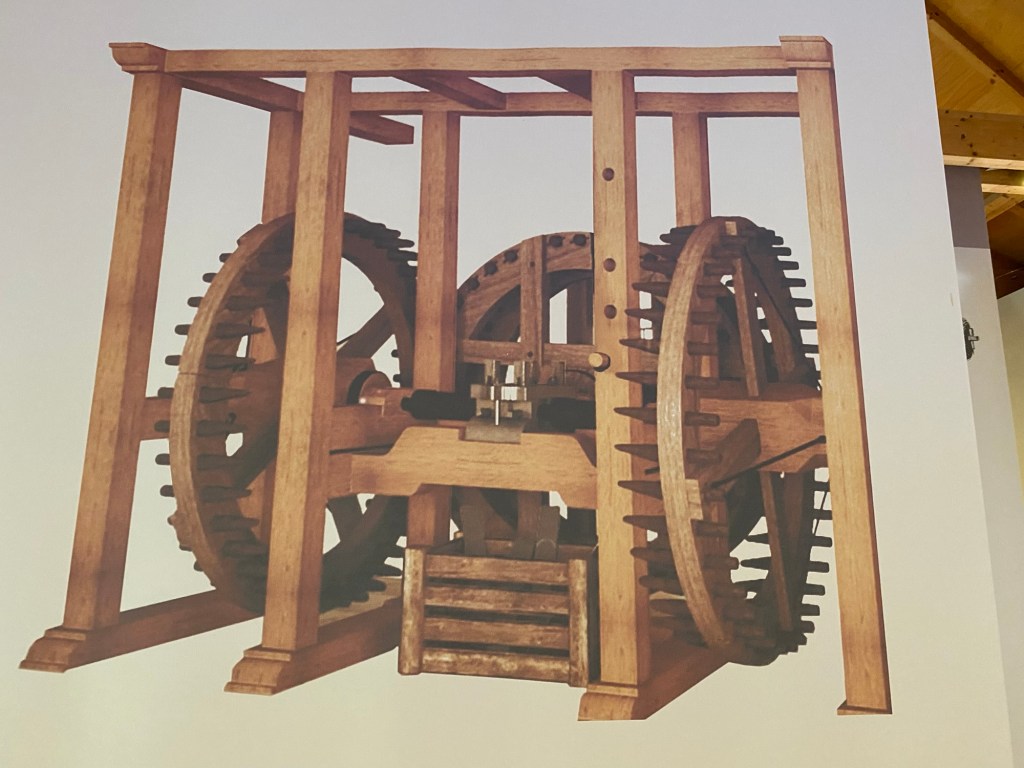
Next, the strip of metal was passed between steel rollers which carried the relief of the coin in question.
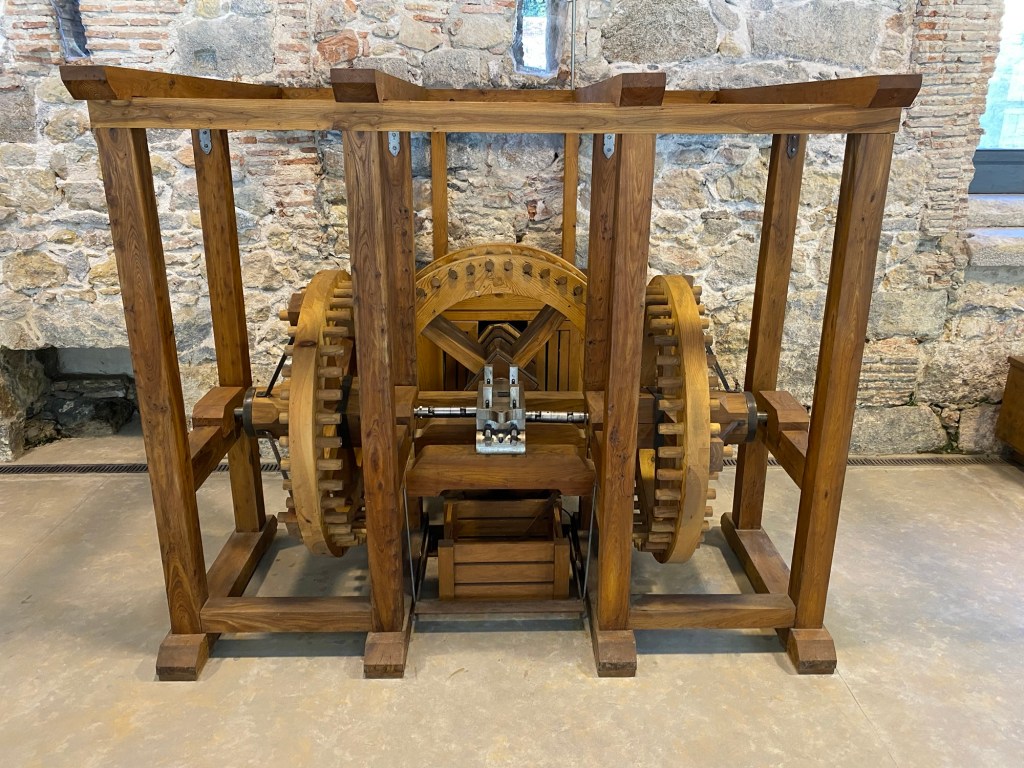
There would then be a strip of metal with the face of coins of one side and the tails of the reverse. A stamp then cut the coins loose.
It was not only the influx of silver from Peru, there was also the problem of counterfeit coins. The mechanical system produced coins of the same size and weight making counterfeiting much more difficult.
I find it salutary that it wasn’t until the eighteenth century that Matthew Boulton in Birmingham in England produced a similar mechanical minting machine capable of producing coinage in bulk that could resist counterfeiting.
 Philip Hamlyn Williams