
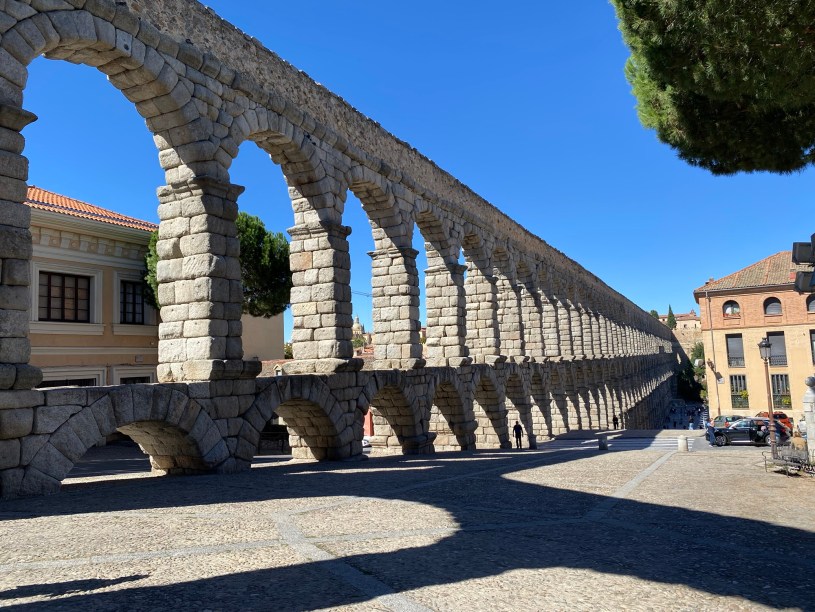
In the First Century CE, the Romans brought fresh water to the city of Segovia over a distance of fifteen km from the Sierra de Guadarrama mountain range. The first thirteen km are underground in a stone and concrete duct, but then it enters the city in this channel in what is first a low wall.
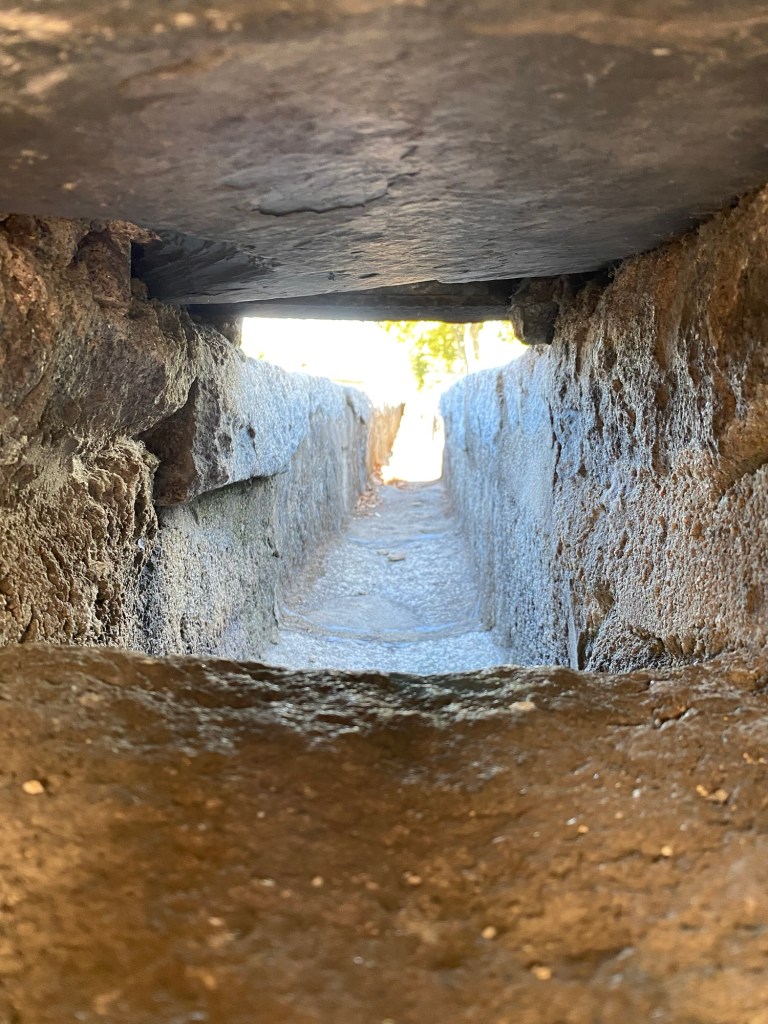
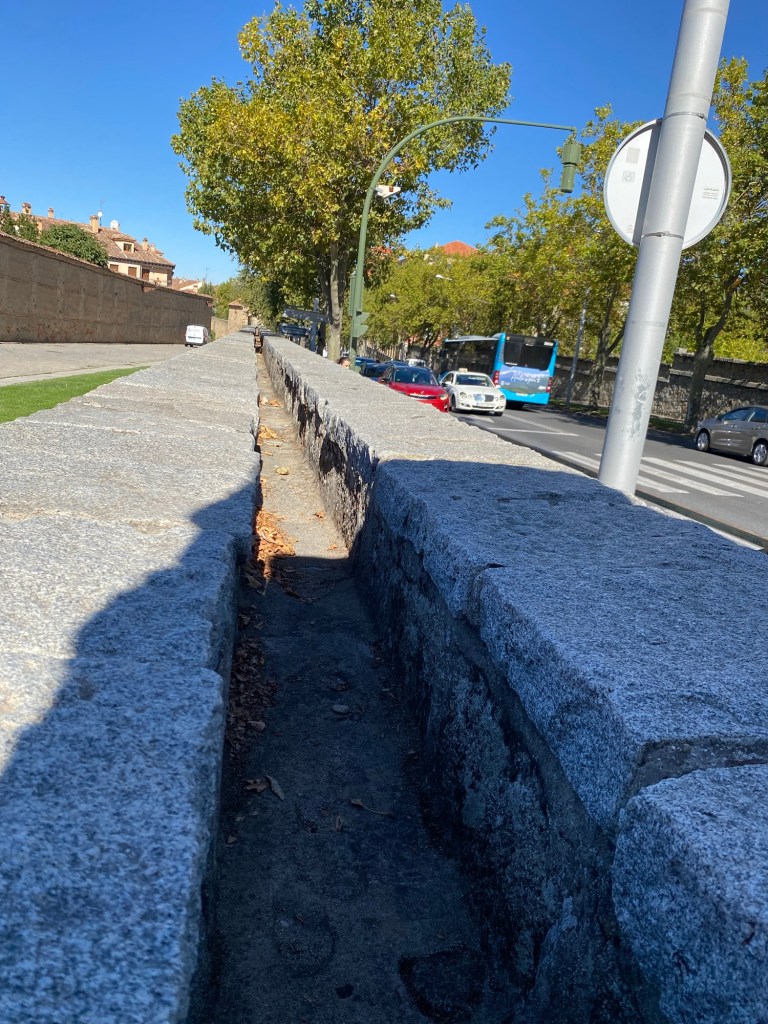
The stream of water then enters a low aquaduct
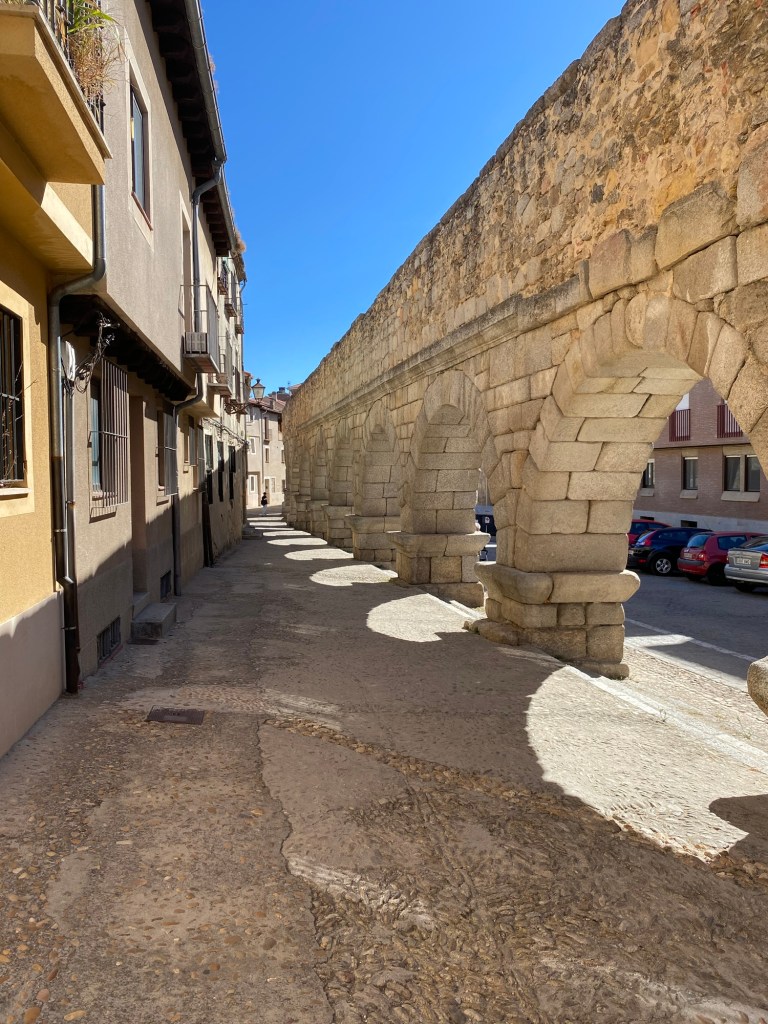
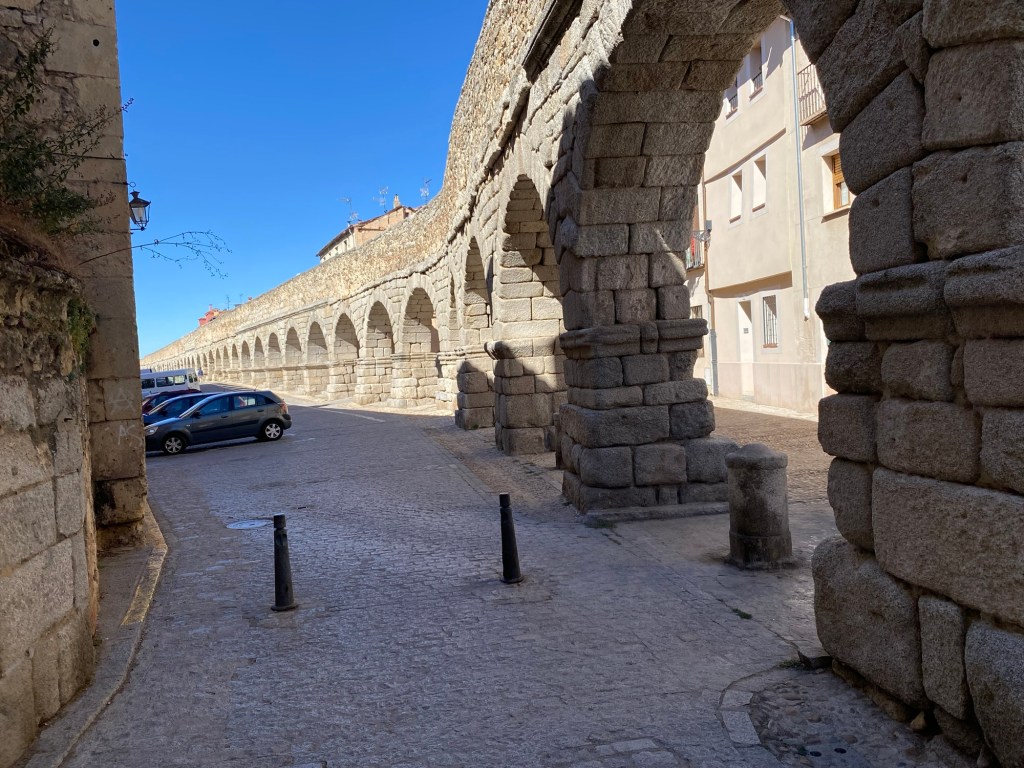
Then the ground falls and the duct turns a corner


The arched section extends just under one km at a height reaching 28 metres over 167 arches before running underground to the castle. A masterpiece of Roman hydraulic engineering, the aqueduct is composed of large unmortared, brick-like granite ashlars.
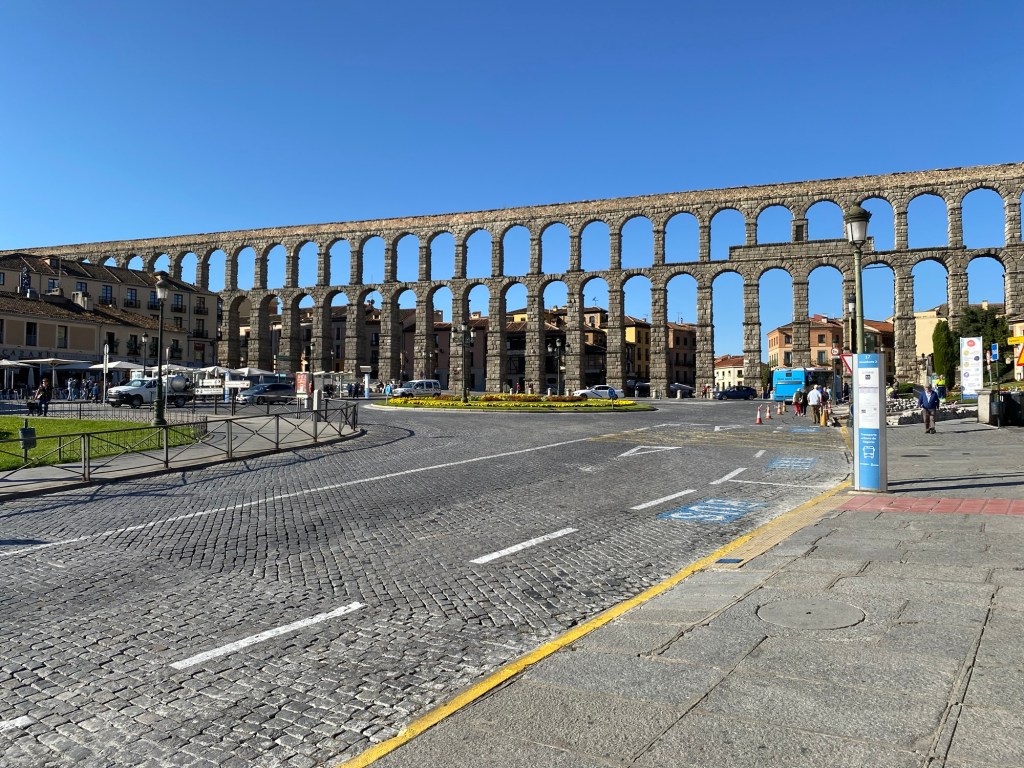
It was declared a National Monument on the 11th October 1884 and added to the UNESCO World Heritage List on the 6th December 1985.
‘This extraordinary work, combining utility with beauty and harmony, has been in use up until recently. It has hardly been changed over the centuries. Only when Segovia was attacked in 1072 by the Moslem Al- Mamún of Toledo, 36 arches were damaged. These arches were restored in the 15th century by Juan de Es-cobedo, monk of El Parral Monastery.’
 Philip Hamlyn Williams