
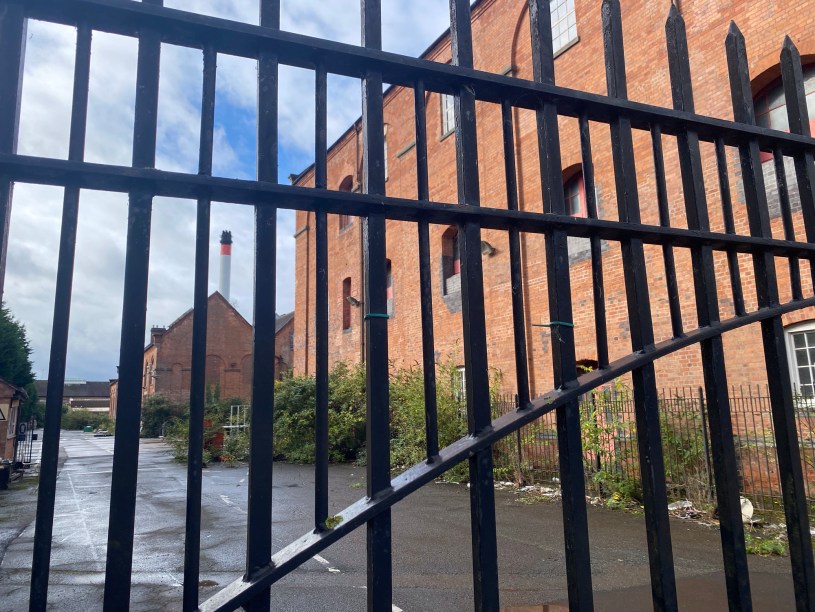
In order the understand the concept and process of levelling up, it may be helpful to look at the reasons behind the un-levelness.
Prosperity came to this country through trade and manufacturing. In the past few years I have been exploring the story of manufacturing, most recently manufacturing places. And therein I believe lies the key.
Manufacturing requires raw materials, energy, manpower, skills, transport and markets.
The geology of these islands dictates where raw materials are to be found, but also the key source of energy: coal. Topography influences climate and hence agriculture, in Britain’s case most particularly where sheep thrive, for wool was the first source of wealth. Topography also influences another source of power, water which also influenced transport routes and the climate suitability for spinning cotton.
In a sense the die was cast long before any human intervention. Raw materials and energy sources are finite and, once depleted and replaced by cheaper sources elsewhere, the places built on them no longer have reason to be there. In more primitive civilisations populations would move to the next place and of course fight all comers for the right to occupy.
21st century Britain doesn’t work like that, yet there are centres of population in places where the reason for being there has gone. Government must thus intervene to bring a share of wealth from the new places of prosperity.
Manpower, as opposed to skills, has largely been replaced by machine power. Skills though are fundamental and bring us back to government which has the ability to teach skills wherever they are needed.
Looking back at manufacturing places, the mechanisation of production taught engineering skills which could then be applied elsewhere: to steam, internal combustion, electricity, renewable and nuclear energy. For example, Stafford shoe makers used machines built by engineers who would later bring their skills to English Electric; similarly with Manchester, cotton, textile machinery and Westinghouse and Ford; so too Preston and English Electric. Coventry had clock making skills which were adapted to sewing machines, bicycles and motor cars.
Birmingham is perhaps a little different, with mechanical skills used to make things for people elsewhere to buy, or for arms production. London takes this a stage further having in itself the largest market but raw materials had to be brought in, so heavy industry hardly featured. There was manpower a plenty, hence the sweat shop production of nineteenth century textiles. There were also skills, hence the manufacture of scientific instruments and machine tools and the attraction for inward investment.
Manufacturing is of course not the whole story. Coal mining communities where coal was taken for use in manufacturing elsewhere. The nineteenth century seaside towns where people no longer holiday in great numbers.
Read more in my British Manufacturing History blog.
The 2022 Government White Paper offers a more detailed and academic guide.
 Philip Hamlyn Williams